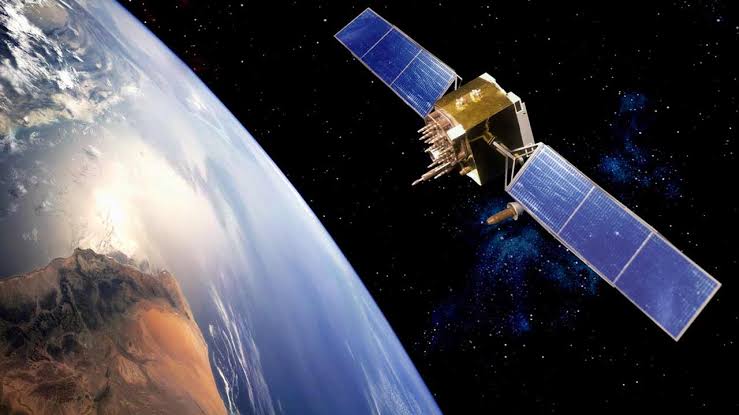
Nigeria has lost the regulatory priority attached to its 2017 filing for a key orbital position at 9.5° West after the International Telecommunication Union cancelled the original NIGCOMSAT-2D application, leaving a later replacement filing to compete with at least 22 earlier satellite networks.
The ITU published the cancellation of the December 6, 2017 filing on March 3, 2026. Nigeria had already submitted a replacement NIGCOMSAT-2D filing for the same 9.5°W position; ITU records show that application was received on December 3, 2025.
The country has not lost the right to pursue the slot. What it has lost is the seniority of the older filing. The new application must now be coordinated with networks that filed earlier, a process a source familiar with the matter described as potentially extremely difficult.
The source compared the situation to building an expensive vehicle without a confirmed parking space. “You would never risk building a $250 million (N332 billion) car when you are not sure where to park it. It is madness,” the source said.
The 9.5°W position has been central to Nigeria’s next-generation satellite plans. Nigerian Communications Satellite Limited (NIGCOMSAT) began acquiring a replacement for the ageing NigComSat-1R in July 2024, started an expression-of-interest process that month for NIGCOMSAT-2A and 2B, and in August 2024 began work on ITU filings for 9.5°W and 16°W. The agency has targeted launches of NIGCOMSAT-2A and 2B in 2027/2028.
Satellite and network names have shifted in official papers. The 9.5°W slot was originally tied to NIGCOMSAT-2D. ITU records also show NIGCOMSAT-2D filings at that position in 2024 and 2025. At another stage, Nigerian submissions referred to NIGCOMSAT-2B at 9.5°W and NIGCOMSAT-2D at 16°W. An ITU document published in 2025 described Nigeria’s request in those terms. The orbital position is the parking space; the satellite designation can change as the programme evolves.
NIGCOMSAT earlier sought an emergency intervention of about $6.9875 million from the Presidency to preserve the position and meet regulatory requirements. It is not clear from available material whether the full sum was released or spent. The 2017 filing was cancelled after the replacement application had already been submitted.
Coordination with earlier networks does not automatically block operations at 9.5°W. It requires agreement on frequencies, power levels, coverage and interference. A larger number of prior claims makes that process more complicated and raises questions about how far procurement should proceed before regulatory certainty is secured.
Difficulties at the slot predate 2026. A 2025 ITU Radio Regulations Board document recorded Nigeria’s request for more time to bring frequency assignments into use for what was then described as NIGCOMSAT-2B at 9.5°W and NIGCOMSAT-2D at 16°W. The Board said it was not then in a position to grant the extension and directed that the assignments be retained pending further information.
NIGCOMSAT has defended the NIGCOMSAT-2A and 2B procurement as competitive and compliant with rules. It has described the satellites as important for communications resilience, broadband, national security, education, healthcare and broadcasting.
The agency has also rejected suggestions that Chapter 11 proceedings involving a related entity show Hughes Network Systems cannot deliver the required infrastructure, saying technical assessment, due diligence and continuity safeguards were considered.
If coordination succeeds, Nigeria can still use 9.5°W. If it does not, the country may need technical changes, different operating parameters, delays or another regulatory path. The outcome depends on the ITU process.
 A story of courage, wonder, and the transformative power of self-belief; perfect for readers aged 10+ who love adventure. To place order: +234 806 130 3237 | +234 803 582 0870 OR Tap the link to grab a copy:https://www.zeekapublish.com/product/the-magical-life-of-anna