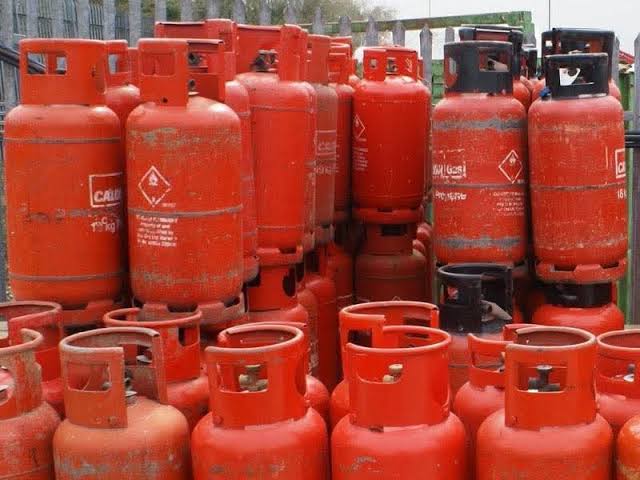
The price of Liquefied Petroleum Gas (LPG), popularly known as cooking gas, has declined across several parts of the Federal Capital Territory (FCT), bringing much-needed relief to households after months of sharp increases.
A market survey by Nairametrics revealed that LPG is now selling for between ₦1,498 and ₦1,650 per kilogram in various Abuja outlets, down significantly from recent peaks of around ₦2,000 per kg recorded in different parts of the country.
At current rates, refilling a 5kg cylinder costs between ₦7,490 and ₦8,250, while a 12.5kg cylinder goes for ₦18,725 to ₦20,625 compared to approximately ₦10,000 and ₦25,000 respectively at the height of the price surge. However, some roadside vendors are still charging as high as ₦1,850 per kilogram.
Industry players attribute the price moderation to improved product availability at coastal depots and a gradual decline in wholesale prices. Retail operators in areas like Kubwa noted that increased competition among filling plants, following better supply, has helped drive prices down.
“The recent decline is encouraging for consumers, but Nigeria must deepen domestic production and strengthen its supply chain to avoid recurring price spikes whenever there are disruptions in the global market,” said energy economist Dr. Dayo Abegunde.
Abegunde emphasised the need for expanded domestic processing capacity, better storage infrastructure, and more efficient distribution networks to achieve long-term price stability. Oil and gas analyst Edward Bulus echoed this view, calling for greater retention of locally produced LPG for domestic use and expanded refining capacity.
LPG marketers in Abuja, including dealer Bassey Etanem, confirmed that enhanced supply has begun filtering through the distribution chain. They expect relative stability if import volumes remain steady and exchange rate pressures are contained. Still, high transportation costs, especially for inland markets, continue to pose challenges.
Consumers have welcomed the reduction but say cooking gas remains unaffordable for many families grappling with the broader cost-of-living crisis.
“Nigerians are still struggling with low purchasing power,” said trader Grace Bade. “The government must commit to its Renewed Hope Agenda… Making cooking gas very affordable as low as ₦500 per kg will be a step in the right direction.”
The price easing follows directives from the Minister of State for Petroleum Resources (Gas), Ekperikpe Ekpo, who instructed regulators and security agencies to intensify surveillance against hoarding, diversion, and price manipulation. The government is also advancing a local LPG blending initiative involving Nigeria LNG Limited (NLNG) and other stakeholders to cut logistics costs and boost domestic supply reliability.
The Nigerian Midstream and Downstream Petroleum Regulatory Authority (NMDPRA) had earlier linked the price surge to global supply disruptions including those linked to the Israel-Iran conflict alongside domestic issues such as inadequate local utilisation of produced LPG, poor infrastructure, and logistics bottlenecks.
While the current moderation offers temporary respite, stakeholders insist that sustainable affordability will require substantial investments in domestic production, storage facilities, and nationwide distribution networks.
 A story of courage, wonder, and the transformative power of self-belief; perfect for readers aged 10+ who love adventure. To place order: +234 806 130 3237 | +234 803 582 0870 OR Tap the link to grab a copy:https://www.zeekapublish.com/product/the-magical-life-of-anna