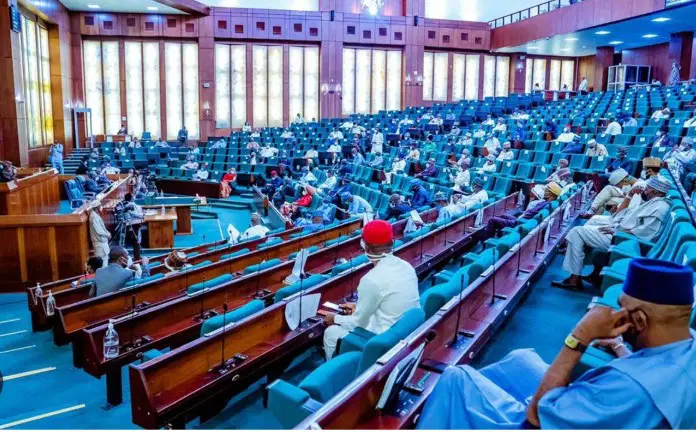
The House of Representatives has demanded stronger food safety laws and enforcement to tackle malnutrition, food insecurity and health dangers linked to unsafe food and the unchecked use of agricultural chemicals.
The House Committee on Nutrition and Food Security said existing policies have fallen short and that Nigeria needs enforceable legislation guaranteeing access to safe, nutritious and affordable food. The position was set out in a speech delivered by the committee’s clerk, Agenti Milicent, on behalf of its chairman, Chike Okafor, at a World Food Day media briefing in Abuja on Friday.
The event was organised by the Centre for Food Safety and Agriculture Research in conjunction with LoveWorld Ministry of Food Technology and Sovereignty.
Okafor’s statement noted that Nigeria continues to face high rates of malnutrition, stunting, wasting and anaemia, as well as low exclusive breastfeeding rates. “We have many policies, but few enforceable laws,” the chairman said, calling for legislative action that would protect every Nigerian—from the unborn to farmers—through access to safe food.
The committee warned that unsafe production practices and the indiscriminate application of chemicals risk worsening public health problems, including kidney and liver diseases. It also urged laws to safeguard local food systems, ensure proper use of nutrition funds and shield children from aggressive marketing of unhealthy products.
Okafor said the committee is advancing several measures, including a bill to establish the Nutritionist Registration Council of Nigeria to regulate the profession. It is also supporting a National Nutrition Bill sponsored by the Presidency through the Office of the Vice-President, which has reached an advanced stage before transmission to the National Assembly.
Among its recent steps, the committee facilitated the creation of nutrition and food security committees in 32 state Houses of Assembly after a legislative retreat in Owerri, Imo State. Those committees later formed the National Legislative Network of Nutrition and Food Security, inaugurated by the Speaker of the House on July 22, 2024.
The committee is investigating alleged misuse of government agricultural intervention funds by agencies and programmes operating outside the Federal Ministry of Agriculture. The probe also covers issues surrounding ginger blight disease that devastated production in parts of the country. Officials have engaged the Central Bank of Nigeria, the National Agricultural Development Board and other agencies as part of the inquiry.
Okafor described malnutrition and food insecurity as both a threat to socio-economic development and an existential challenge. He pointed to rising inflation placing heavier burdens on households and said Nigeria’s arable land, water resources and human capital should enable coordinated action against hunger.
At the same briefing, food safety advocate Dr. Shego raised alarm over the collapse of Nigeria’s ginger output. He said the country, once among the world’s leading ginger exporters, suffered severe losses after farmers used certain agricultural inputs supplied under intervention programmes. Crops developed black spots, blight and softening before harvest. The price of a bag of ginger subsequently jumped from about ₦25,000 to roughly ₦800,000.
Shego called for a thorough review of agricultural intervention programmes and the chemicals used in food production, warning that poorly regulated inputs threaten both food security and public health. He advocated a shift toward organic farming and natural seeds, and urged Nigerians where practical to plant edible crops rather than ornamental plants. “Food safety concerns everyone, regardless of their religious affiliations or background,” he said.
Other participants pressed for closer collaboration across the agricultural value chain. Nwaoloko Ifeanyi, founder of Benjamin Protocol Incorporated, said his organisation had moved into ginger farming and stressed that safety must come before harvest. Lucas Samu of Lufris Global Enterprise said food is “the best medicine you consume” and called for better processing and packaging standards. Ella Omezi, an agricultural commodity expert, said the initiative aims to supply farmers with organic seeds for both domestic processing and export.
Participants described the “Let’s Go Planting” drive as an effort to encourage household and commercial farming while attracting investment into production, processing and distribution. The briefing marked the 2026 World Food Day under the theme “Innovate Today, Nourish Tomorrow.”
 A story of courage, wonder, and the transformative power of self-belief; perfect for readers aged 10+ who love adventure. To place order: +234 806 130 3237 | +234 803 582 0870 OR Tap the link to grab a copy:https://www.zeekapublish.com/product/the-magical-life-of-anna