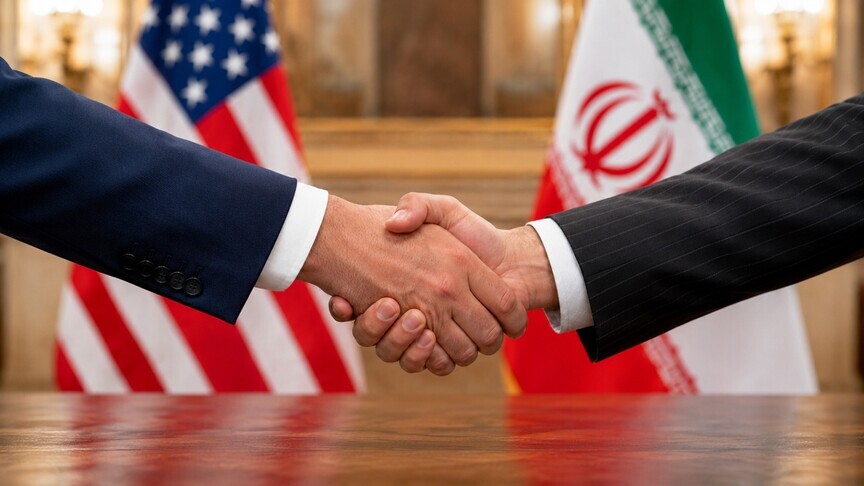
Direct negotiations between the United States and Iran began in Switzerland on Sunday, despite Tehran’s renewed claim that it has closed the Strait of Hormuz in response to alleged violations of a recently signed ceasefire agreement.
The talks, aimed at solidifying an initial US-Iran deal to halt regional hostilities, come just days after both sides committed to ending the conflict, including fighting in Lebanon and to pursue a comprehensive settlement over the next 60 days.
US Vice President JD Vance arrived early Sunday for the latest round of discussions, joining an Iranian delegation led by parliamentary speaker Mohammad Bagher Ghalibaf and Foreign Minister Abbas Araghchi, who reached Switzerland on Saturday night. Pakistan’s Prime Minister Shehbaz Sharif and military chief Field Marshal Asim Munir are also participating, with Islamabad continuing its role as a key mediator.
“Pakistan will continue to support the implementation of the understandings between Iran and the United States,” Pakistan’s Foreign Ministry said in a statement.
Speaking before his departure, Vance expressed hope for progress on the nuclear issue and the Lebanon ceasefire. “Things are actually getting better there, and things are slowing down a little bit,” he said, adding that the goal remains ensuring the safety and security of both Israel and Lebanon.
Iran, however, entered the talks on a combative note. Foreign Ministry spokesman Esmail Baghaei said Tehran would demand that the other side “fulfil its commitments.”
The negotiations are shadowed by Iran’s announcement that it has once again closed the strategically vital Strait of Hormuz, which it had briefly reopened following the initial US-Iran agreement.
Iranian officials, including the Islamic Revolution Guard Corps (IRGC), cited Israeli strikes in southern Lebanon as a breach of the deal’s first clause, which calls for the “immediate and permanent termination of military operations on all fronts, including in Lebanon.”
The US military firmly rejected the claim. US Central Command (CENTCOM) spokesperson Tim Hawkins stated that maritime traffic remains unaffected. “Traffic continues to flow” through the strait, he said, adding that Iran does not control the waterway. CENTCOM reported that 55 merchant ships carrying more than 17 million barrels of oil passed through the strait on Saturday.
The US-Iran agreement has been complicated by persistent clashes between Israel and Hezbollah, despite a formal ceasefire being confirmed on Friday. Lebanon’s health ministry reported at least 47 people killed in Israeli airstrikes on Saturday. The Israel Defense Forces (IDF) said it targeted 80 Hezbollah-linked sites and killed “dozens” of fighters, while confirming the deaths of four Israeli soldiers.
Hezbollah has accused Israel of attempting to sabotage the broader agreement through continued operations in Lebanon. The US has also criticized Israel’s actions in the country, which escalated after Hezbollah launched rockets into Israel in response to earlier strikes.
Since hostilities between Israel and Hezbollah resumed on March 2, Leban0on’s health ministry says 4,057 people have been killed.
The Swiss talks represent a critical test for the fragile US-Iran understanding, with both sides under pressure to manage ongoing regional flashpoints while advancing toward a more lasting resolution.


 A story of courage, wonder, and the transformative power of self-belief; perfect for readers aged 10+ who love adventure. To place order: +234 806 130 3237 | +234 803 582 0870 OR Tap the link to grab a copy:https://www.zeekapublish.com/product/the-magical-life-of-anna