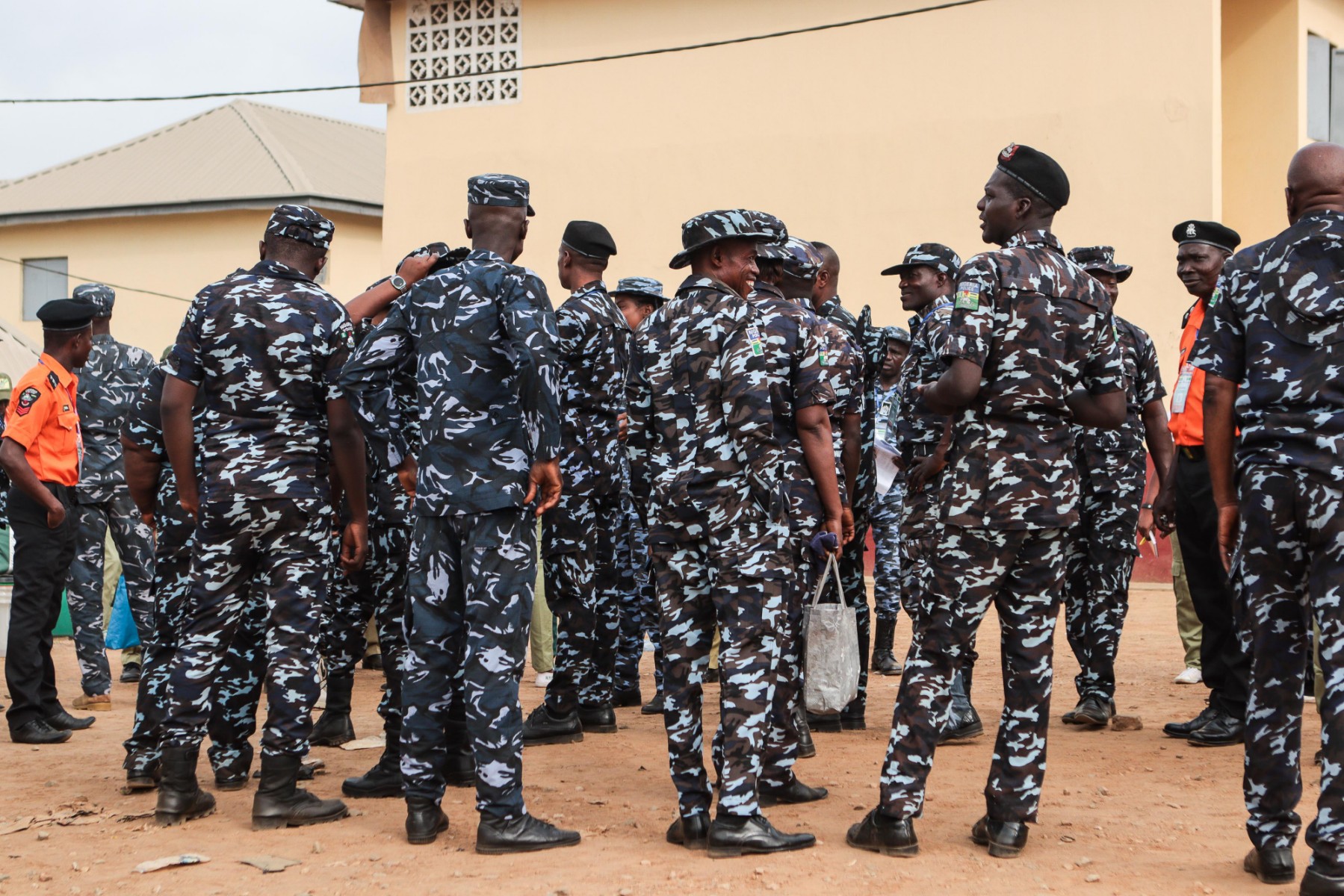
A retired senior police officer has raised strong concerns over the viability of Nigeria’s newly approved state police system, warning that inadequate funding and potential political interference by state governors could undermine the initiative.
Balarabe Sule, a former Commissioner of Police, voiced his reservations shortly after the Senate passed the executive bill establishing state police forces across the federation. While acknowledging the potential benefits of decentralised policing, Sule cautioned that many states are ill-prepared for the transition.
“Many states will not have the resources to equip and pay remuneration for those to be employed to function effectively,” Sule stated.
The retired officer identified five major threats to the success of the new security architecture: chronic underfunding, corruption, abuse of power by governors, conflicting interests between states, and the absence of uniform operational standards nationwide.
Sule drew particular attention to the link between poor welfare and corruption. “When you don’t pay them well and as at when due, they will be exposed to corruption. You don’t expect an officer who is not well paid and equipped to perform optimally,” he said.
He also expressed fears that governors, as the primary funders of the state police, could weaponise the force against political opponents, despite any built-in checks and balances. “State police will be subject to abuse by the governors who pay them,” Sule warned.
Another critical challenge, according to the ex-police boss, is the lack of operational uniformity. With each of the 36 states operating under different economic conditions, a uniform national policing model may prove difficult to sustain, potentially creating inconsistencies in standards and effectiveness.
Despite these reservations, Sule highlighted a key advantage of the state police model – its community-oriented approach. Officers recruited locally would bring intimate knowledge of their areas, improving intelligence gathering and crime prevention.
“In your locality, you practically know everyone and where crimes are likely to be committed,” he noted. “Recruitment will be done in such a way that only indigenous people will be posted to their area.”
The Senate’s passage of the bill marks a significant step towards decentralising policing in Nigeria, a long-debated reform aimed at addressing the limitations of the centralised federal police force in tackling rising insecurity. However, experts and stakeholders continue to debate the readiness of states to shoulder the financial and administrative responsibilities that come with it.
 A story of courage, wonder, and the transformative power of self-belief; perfect for readers aged 10+ who love adventure. To place order: +234 806 130 3237 | +234 803 582 0870 OR Tap the link to grab a copy:https://www.zeekapublish.com/product/the-magical-life-of-anna