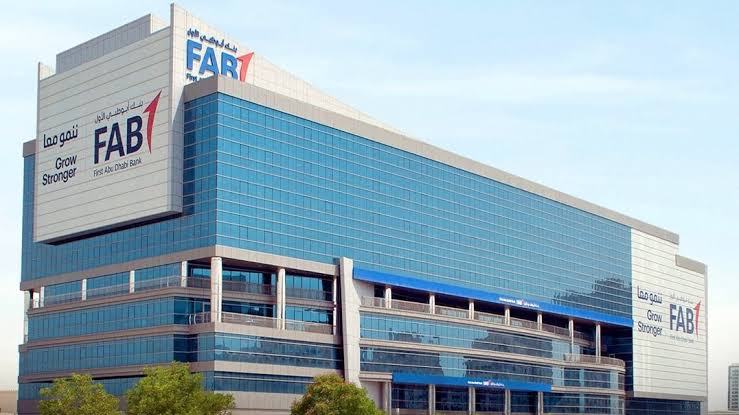
Nigeria has accessed approximately $1.5 billion as the first tranche of a $5 billion derivatives financing arrangement with First Abu Dhabi Bank PJSC, the United Arab Emirates’ largest largest lender.
The drawdown, executed through a Total Return Swap (TRS) transaction over the past two weeks, marks the initial utilisation of the facility approved by the National Assembly earlier this year. The funds are intended to support debt refinancing and infrastructure development as part of the federal government’s strategy to diversify external borrowing sources and lower financing costs.
Efforts by THISDAY to independently verify the transaction with the Federal Ministry of Finance were unsuccessful, as calls and messages to the Minister of Finance and Coordinating Minister of the Economy, Taiwo Oyedele, went unanswered as of press time. Sources cited by Bloomberg requested anonymity because they were not authorised to speak publicly on the matter.
The deal has attracted scrutiny from market observers due to limited public disclosure on its terms and structure. Both the International Monetary Fund (IMF) and Fitch Ratings have cautioned that while such derivative-based financing can provide liquidity relief, it requires robust transparency to mitigate potential fiscal and debt risks.
Despite the ongoing global and domestic headwinds, the naira demonstrated resilience in the foreign exchange market. It closed at ₦1,380.9/$ at the official window on Friday, marginally weaker from ₦1,380.1/$ the previous day, while remaining stable at ₦1,390/$ on the parallel market for the third consecutive week.
Analysts attribute the currency’s relative stability to strong macroeconomic fundamentals, steadily rising external reserves which now stand at $51.2 billion and continued foreign portfolio investment inflows.
However, the naira has faced mounting pressure in recent sessions. Investors appear to be repositioning ahead of the anticipated dollar-denominated fundraising by Dangote Refinery and Petrochemicals, prompting a shift of capital from naira assets into dollars. This has coincided with increased profit-taking on the Nigerian Exchange and a sharp decline in global crude oil prices.
Brent crude has fallen to around $76 per barrel from over $100 a month ago, following the U.S.-Iran ceasefire, dampening expectations for Nigeria’s oil export revenues.
Ayokunle Olubunmi, Head of Financial Institutions Ratings at Agusto & Co, noted that the dollar demand is largely linked to preparations for the Dangote transaction. “A lot of people are trying to get themselves ready… as some expect it to come to the market this year,” he said, while downplaying any significant political influence on current forex demand given the timing of party primaries.
Jeremiah Ubah, Chief Investment Officer at VNL Capital Asset Management, echoed this view, linking the pressure to capital reallocation towards the dollar-denominated Dangote opportunity. “We’re seeing market selloffs, profit-taking and some reallocation of capital towards this,” he explained.
The federal government continues to explore innovative financing options amid efforts to stabilise the economy, manage public debt, and support key infrastructure projects. Further details on the full terms of the $5 billion facility are expected to emerge as additional tranches are drawn.
 A story of courage, wonder, and the transformative power of self-belief; perfect for readers aged 10+ who love adventure. To place order: +234 806 130 3237 | +234 803 582 0870 OR Tap the link to grab a copy:https://www.zeekapublish.com/product/the-magical-life-of-anna