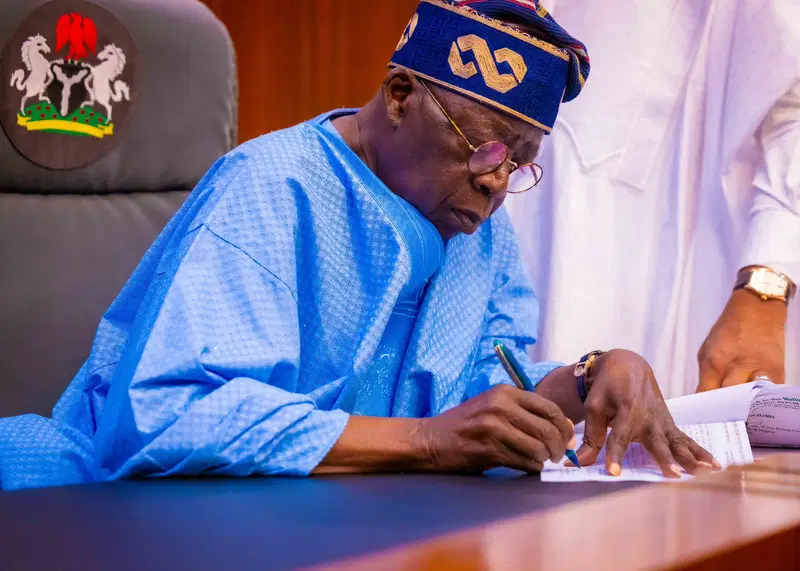
President Bola Tinubu is set to receive the Executive Bill package for the National Policing Bill on September 3, 2026, as the Presidency accelerates efforts to put in place a workable legal framework for state police across the country.
Chief of Staff to the President and Chairman of the Presidential Working Group on the National Policing Bill, Femi Gbajabiamila, made the announcement on Monday after the group’s meeting at the Presidential Villa.
Gbajabiamila told State House correspondents that the approved work programme is a seven-week, milestone-driven exercise running from July 27 to September 14. The Executive Bill package is scheduled for presentation to the President on September 3. Subject to his approval, a national consultation on the completed draft will follow. After that, the text and supporting materials will be revised and prepared for formal transmission to the National Assembly.
“The timetable is demanding, but it is not a shortcut,” he said.
The group has also invited the public to submit memoranda, position papers and practical proposals. Gbajabiamila explained that the national consultation will give Nigerians the chance to engage with the actual clauses, safeguards, funding proposals and transition arrangements.
The move comes after the National Assembly passed the Constitution Alteration (State Police) Bill, 2026. That amendment creates the framework for a dual policing system, a Federal Police Service alongside State Police Services in the 36 states. It does not, however, spell out how the new structure will work on the ground.
Tinubu had earlier inaugurated the Presidential Working Group to prepare the operational legislation. The group’s task is to produce a technically robust, implementation-ready draft that covers minimum policing standards, state readiness certification, federal-state coordination, accountability mechanisms, human rights safeguards and fiscal conditions.
Gbajabiamila stressed that no state police service will begin operations until the full constitutional process is completed and the necessary implementing laws are in place. The Nigeria Police Force remains the only constitutionally recognised police institution for now.
The final package expected on the President’s desk will go beyond a simple draft bill. It is expected to include schedules, an explanatory memorandum, a legal audit, a clause-by-clause analysis, a state readiness framework, a fiscal and implementation note, a validation report, a risk register and a controlled digital archive.
A multidisciplinary Policy Advisory Committee chaired by Justice Mohammed Abdullahi Liman has also been approved to provide technical oversight and validate the bill, fiscal framework and implementation materials before the President considers them.
The working group is reviewing the Police Act 2020, the Police Service Commission framework, existing police regulations and other related laws. The aim is to create clear rules on recruitment, training, use of force, complaints procedures, data management and professional conduct so that standards remain consistent nationwide even as states take on more local policing responsibilities.
Under the proposed arrangement, states will not automatically set up police services. Each state must first pass its own law establishing a State Police Service and obtain certification that it meets national minimum standards. Governors will have powers to appoint Commissioners of Police, subject to confirmation by the state House of Assembly, and to issue general policy directives on public safety and order. The Federal Police Service will retain responsibility for national security threats, terrorism, organised crime, cybercrime and offences that cross state or international borders. It will also keep emergency intervention powers where public order breaks down or serious abuses occur.
Gbajabiamila described the exercise as one of the most consequential reforms of the Tinubu administration. He said the government is determined to ensure that the creation of state police is backed by a comprehensive legal and operational framework rather than rushed into existence.
Public submissions will be received for two weeks. Stakeholders, including citizens, civil society groups, security professionals, state and local governments, academics and professional bodies are encouraged to contribute. Their input will be reviewed and integrated into the draft before the wider national consultation begins.
The constitutional amendment still requires approval by at least 24 state Houses of Assembly before it can receive presidential assent. Until that process is finished and the National Policing Bill becomes law, the existing federal structure remains fully in force.
For now, the Presidential Working Group is focused on meeting the September 3 deadline and producing a document that can stand up to public scrutiny and legislative examination. The coming weeks will test whether the ambitious timetable can deliver a framework that balances local control with national standards and safeguards.
 A story of courage, wonder, and the transformative power of self-belief; perfect for readers aged 10+ who love adventure. To place order: +234 806 130 3237 | +234 803 582 0870 OR Tap the link to grab a copy:https://www.zeekapublish.com/product/the-magical-life-of-anna