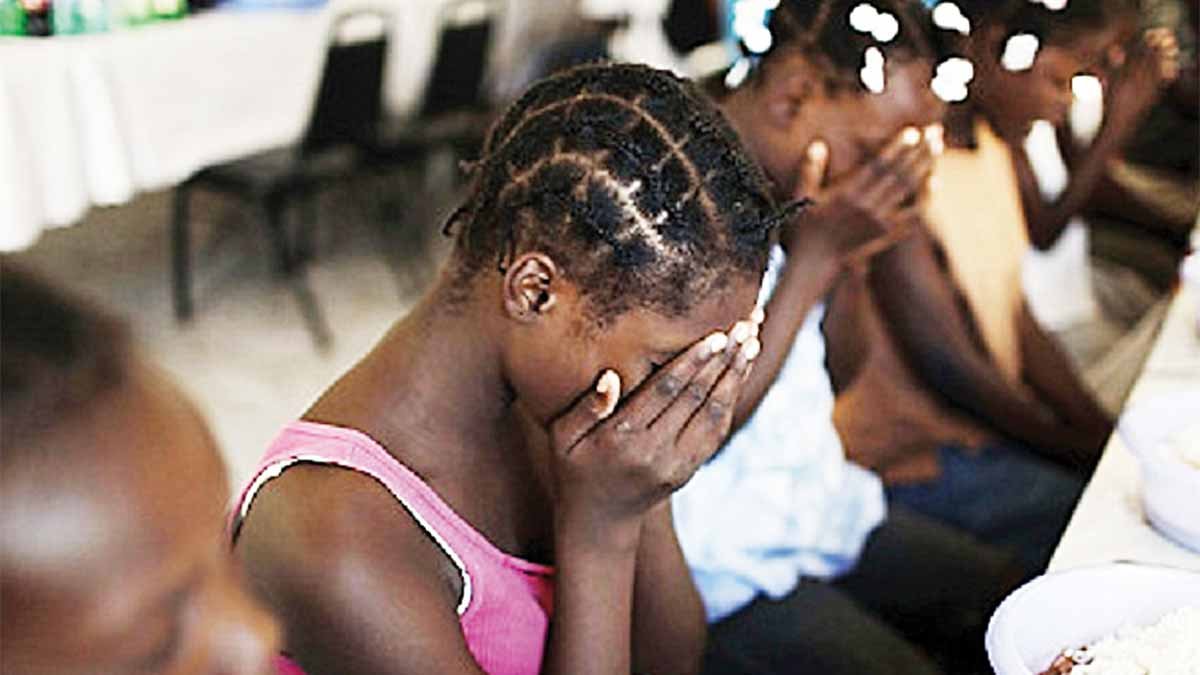
Sexual and gender-based violence remains a persistent crisis in Nigeria despite existing laws and awareness efforts, with the National Agency for the Prohibition of Trafficking in Persons (NAPTIP) recording 756 cases between January and July 2026.
Of those cases, 549 were investigated, 64 arrests made, two convictions secured and 183 victims rescued. Since its inception, NAPTIP has logged 5,255 reported cases, 2,887 investigations, 605 arrests, 40 successful prosecutions and 2,592 rescues.
The figures align with broader survey data. The 2024 Nigeria Demographic and Health Survey found that 21 per cent of women aged 15–49 had experienced physical or sexual violence. Only 24 per cent of survivors sought help to stop the abuse, while 58 per cent neither sought help nor told anyone. The survey also showed that 22 per cent of women and 16 per cent of men believed a husband could be justified in beating his wife under certain conditions.
The Womanity Index 2025 by Invictus Africa reported that domestic or intimate partner violence accounted for 51 per cent of gender-based violence cases. Fifty-nine per cent of Nigerians said they had experienced such violence themselves or knew someone who had. Seventy-six per cent of incidents occurred in the home.
NAPTIP’s Vincent Adekoya attributed the continued prevalence to poverty, harmful traditional norms, insecurity, displacement, climate change and technology. Poor families often live in overcrowded, unsafe conditions that increase exposure to abuse. Cultural practices in some communities treat violence as normal and reinforce unequal gender roles. Displacement and loss of livelihoods leave people highly vulnerable, while climate pressures force further migration. Online platforms have opened new avenues for grooming, child pornography, revenge porn and sextortion.
Adekoya said NAPTIP continues to implement the Violence Against Persons Prohibition Act and has established Anti-Trafficking and Violence Against Persons Vanguard groups in schools to help children recognise warning signs and speak out. He called for community leaders to work more closely with government institutions and for widespread grassroots education.
Survivor and social impact advocate Morenikejimi Olaniran, project lead at the Centre for Teens Health and Development, said reported figures capture only a fraction of the problem. Many young people experience sexual abuse, harassment, exploitation, intimate partner violence and emotional abuse, often without recognising it as such, particularly when the perpetrator is a trusted figure at home, school, church, mosque or in the community. Age, poverty, disability, displacement and limited knowledge of boundaries and consent heighten vulnerability. Fear, stigma, victim-blaming and weak trust in justice systems keep many silent. Trauma can persist long after the incident, affecting mental health, education, relationships and self-worth. Olaniran urged stronger child-protection systems, trained school professionals, survivor-centred services and a coordinated national approach covering prevention through to justice.
Armsfree Ajanaku of the Grassroots Centre for Rights and Civic Orientation stressed that Nigeria is bound by international instruments including CEDAW, the Maputo Protocol and the Sustainable Development Goals. Cultural or religious justifications cannot excuse violence; the priority is rigorous implementation and accountability.
Wynyfred Achu-Egbuson of International IDEA’s ESGBV programme, supported by the European Union, highlighted the media’s role in shifting harmful social norms. The programme works on legislation, survivor services and social-norm change, including the SGBV Media Corps that trains journalists, influencers and community communicators to avoid victim-blaming, sensationalism and privacy breaches.
The data and expert testimony point to the same conclusion, laws and programmes exist, yet violence continues in homes, schools, communities and digital spaces. Survivors need systems and a society that believe them, protect them and support recovery rather than assign blame.
 A story of courage, wonder, and the transformative power of self-belief; perfect for readers aged 10+ who love adventure. To place order: +234 806 130 3237 | +234 803 582 0870 OR Tap the link to grab a copy:https://www.zeekapublish.com/product/the-magical-life-of-anna