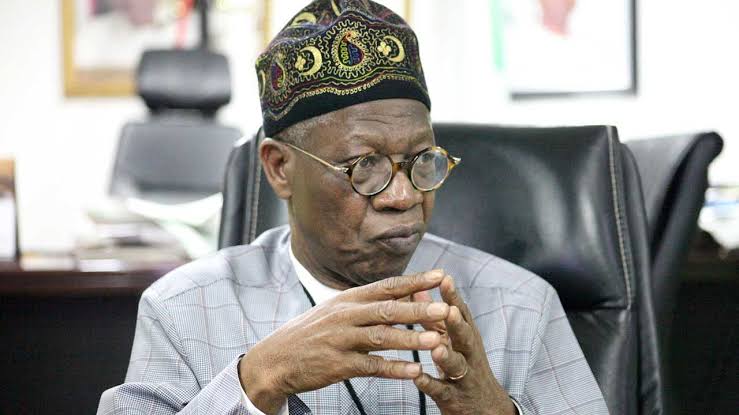
Former Nigerian Information and Culture Minister Lai Mohammed has urged African governments to treat the Meetings, Incentives, Conferences and Exhibitions (MICE) sector as a core economic driver rather than a tourism side activity, noting that the continent captures only about four per cent of a global market valued at $1.3 trillion.
Speaking as a panellist at the ninth Africa MICE Summit in Mombasa, Kenya, on 1–2 October, Mohammed said business events should be deliberately structured to attract investment, expand trade, forge partnerships and generate jobs. The summit, themed “Building Africa’s MICE Economies,” drew delegates from 19 countries and was opened by Mombasa County Executive Council Member for Tourism, Culture and Trade Mohamed Osman Ali.
“MICE should not be seen simply as people coming to Africa, staying in hotels, eating in restaurants and flying home,” Mohammed said. “MICE is an economic instrument. It can bring investors, buyers, policymakers, experts and businesses into our economies. In other words, MICE can become Africa’s deal-making engine.”
He argued that countries should develop strategies around their comparative strengths instead of competing for the same events. He pointed to Nigeria’s entertainment industry, Kenya’s athletics and tourism sectors, South Africa’s established conference infrastructure and Rwanda’s rise as a regional business gateway as examples that could be leveraged more effectively.
Mohammed also called for joint African bids for major international events, with hosting shared among countries, citing the 2026 FIFA World Cup co-hosted by Canada, Mexico and the United States as a model.
Using Lagos as an illustration, he recalled a study commissioned during his time as minister that found roughly 20,000 events take place in the city each month. He cited the growth of “Detty December” as evidence that major gatherings can stimulate aviation, hospitality, transport, entertainment, media, fashion, technology and retail.
Yet he warned that Africa’s ambitions would remain limited without better infrastructure and easier movement. Convention centres, hotels, airports, transport networks, digital systems and reliable utilities are essential, he said, along with improved intra-African air links, wider use of e-visas or visa-on-arrival where appropriate, and faster processing for accredited conference delegates.
Beyond physical facilities, Mohammed stressed the need for stable investment climates. Political uncertainty, policy reversals, weak institutions and corruption, he said, erode investor confidence. “Africa does not only have to sell its opportunities. It has to sell credibility.”
He urged governments to shift how they measure success, moving beyond delegate numbers and hotel occupancy to track investments attracted, business meetings held, trade generated and jobs created. He recommended the establishment of empowered National Convention Bureaux to bid for events, coordinate public and private efforts, support business visitors and assess economic impact.
Even smaller countries, he noted, can become significant MICE destinations by positioning themselves as connectors of businesses and markets rather than mere consumption venues, again citing Rwanda’s approach.
The ultimate test of any event, Mohammed said, is whether it produces tangible results: “Did an investment come? Did a trade relationship begin? Did a business partnership emerge? Did jobs get created?
That is when MICE stops being merely an event, and becomes an engine of economic transformation.”
Mohammed chairs the Board of Trustees and Governing Council of the Eko Tourism Foundation.
 A story of courage, wonder, and the transformative power of self-belief; perfect for readers aged 10+ who love adventure. To place order: +234 806 130 3237 | +234 803 582 0870 OR Tap the link to grab a copy:https://www.zeekapublish.com/product/the-magical-life-of-anna