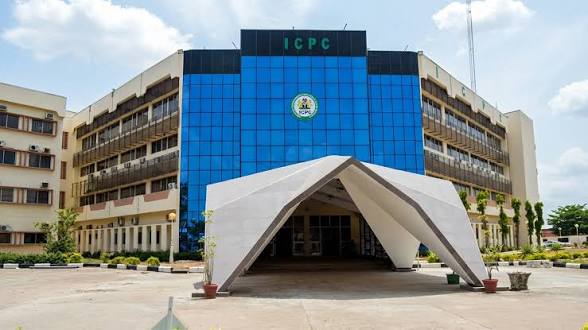
On March 9, 2026, a Federal High Court in Abuja dismissed a lawsuit filed by businessman Paul Afagase Johnson (also referred to as Paul Afagase) seeking to restrain the Independent Corrupt Practices and Other Related Offences Commission (ICPC) from investigating or inviting him over an alleged ₦350 million contract-related matter.
What are the facts?
Johnson approached the court to stop the ICPC probe, arguing that the dispute was purely civil and contractual in nature, not criminal, and therefore should not attract the attention of an anti-graft agency.
He also claimed damages of ₦500 million from the ICPC.
The court, presided over by Justice K. Omotosho, rejected these arguments and dismissed the suit in its entirety.
Court’s Reasoning
The judge held that:
The ICPC has clear statutory powers under its enabling Act to investigate allegations bordering on corruption and related offences.
Courts should not restrain law enforcement or anti-corruption agencies from performing their duties when credible allegations of criminal conduct exist.
The matter was not just a simple contract dispute; there were sufficient elements that justified the ICPC stepping in.
By dismissing the suit, the court effectively cleared the way for the ICPC to continue its investigation, including possibly inviting or questioning Johnson.
Background/Context
This ruling is part of a pattern where Nigerian courts have repeatedly affirmed the ICPC’s authority when individuals or officials try to use the judiciary to block probes. Similar decisions have been made in other cases, such as challenges by former lawmakers in Abia State and probes involving security votes in Bauchi.
In Nigeria, anti-graft agencies like the ICPC and EFCC often face suits from persons under investigation who argue that the issues are “civil” to stall or quash probes. Courts have increasingly pushed back against such attempts when the allegations involve public funds, contracts, or abuse of office.
Implications
For the ICPC: Strengthens its hand to proceed without judicial interference in this case. It reinforces that the agency cannot easily be stopped from investigating suspected corrupt practices in contract awards or financial transactions.
For the businessman: He must now face the ICPC investigation. If evidence of corruption, gratification, or abuse is found, he could face charges.
Broader message: Attempts to classify potentially corrupt contract disputes as purely “civil matters” to evade anti-graft scrutiny are unlikely to succeed in court.
This case highlights the ongoing tension between contractual/business disputes and criminal corruption allegations in Nigeria’s public procurement space. If new developments emerge (e.g., ICPC inviting Johnson or filing charges), the story could evolve further.
 A story of courage, wonder, and the transformative power of self-belief; perfect for readers aged 10+ who love adventure. To place order: +234 806 130 3237 | +234 803 582 0870 OR Tap the link to grab a copy:https://www.zeekapublish.com/product/the-magical-life-of-anna