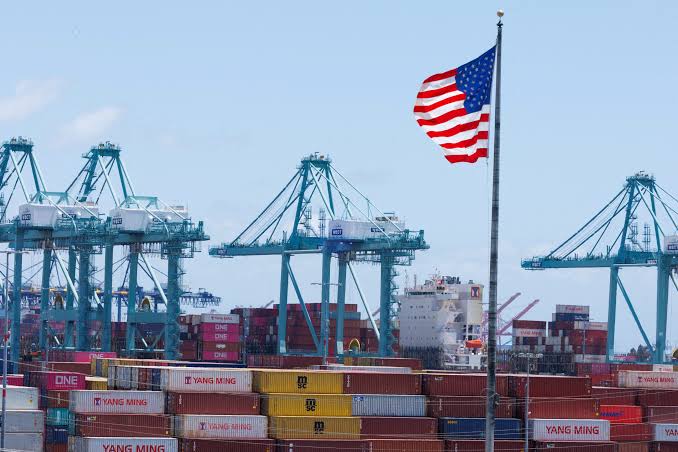
The United States trade deficit expanded slightly less than economists had anticipated in March, as strong imports driven by the ongoing artificial intelligence infrastructure buildout outweighed gains in exports.
According to data released Tuesday by the Commerce Department, the trade gap widened 4.4% to $60.3 billion — coming in narrower than the $60.9 billion consensus forecast from surveys by Dow Jones Newswires and The Wall Street Journal.
Key Drivers Behind the Figures
Imports climbed 2.3% to $381.2 billion, fueled primarily by:
A surge in vehicle and auto parts imports
Strong consumer goods demand
Robust capital goods inflows, particularly computers, semiconductors, and related equipment tied to the AI hardware expansion
Economists noted that sustained AI-related investment continues to support strong capital goods imports, pointing to resilient business spending that could extend into 2026.
Exports rose a more modest 2.0% to $320.9 billion, helped by higher shipments of crude oil and petroleum products. This increase followed the outbreak of conflict in the Middle East on February 28, triggered by US-Israeli strikes on Iran. Analysts suggest the jump in energy exports could help narrow the trade deficit in coming months.
Exports of foods, feeds, and beverages also recorded notable gains.
The March data offers an early look at trade flows following the Supreme Court’s decision to strike down significant portions of President Donald Trump’s previous global tariff measures. In response, the administration has swiftly implemented a temporary 10% duty under alternative authorities and is preparing longer-term levies.
Trump’s rapidly evolving tariff policies since returning to the White House have triggered volatility in trade patterns, with businesses accelerating imports ahead of potential duty hikes.
While household spending and consumer-related imports remained buoyant in March, economists are watching closely how rising energy costs — triggered by Tehran’s retaliation and the near-blockade of the Strait of Hormuz — will affect future demand.
Oxford Economics’ Grace Zwemmer highlighted that the faster rise in imports was partly driven by vehicles, while AI-linked capital goods imports stayed strong.
ING’s James Knightley added that the figures align with recent GDP data showing sustained tech investment, though higher energy prices could eventually weigh on the household sector.
Overall, March’s trade deficit reflects two powerful crosscurrents: robust domestic demand for AI technology and consumer goods on one side, and emerging geopolitical energy shocks on the other. The coming months will reveal whether surging oil exports and potential tariff adjustments can offset the persistent drag from high imports.
 A story of courage, wonder, and the transformative power of self-belief; perfect for readers aged 10+ who love adventure. To place order: +234 806 130 3237 | +234 803 582 0870 OR Tap the link to grab a copy:https://www.zeekapublish.com/product/the-magical-life-of-anna