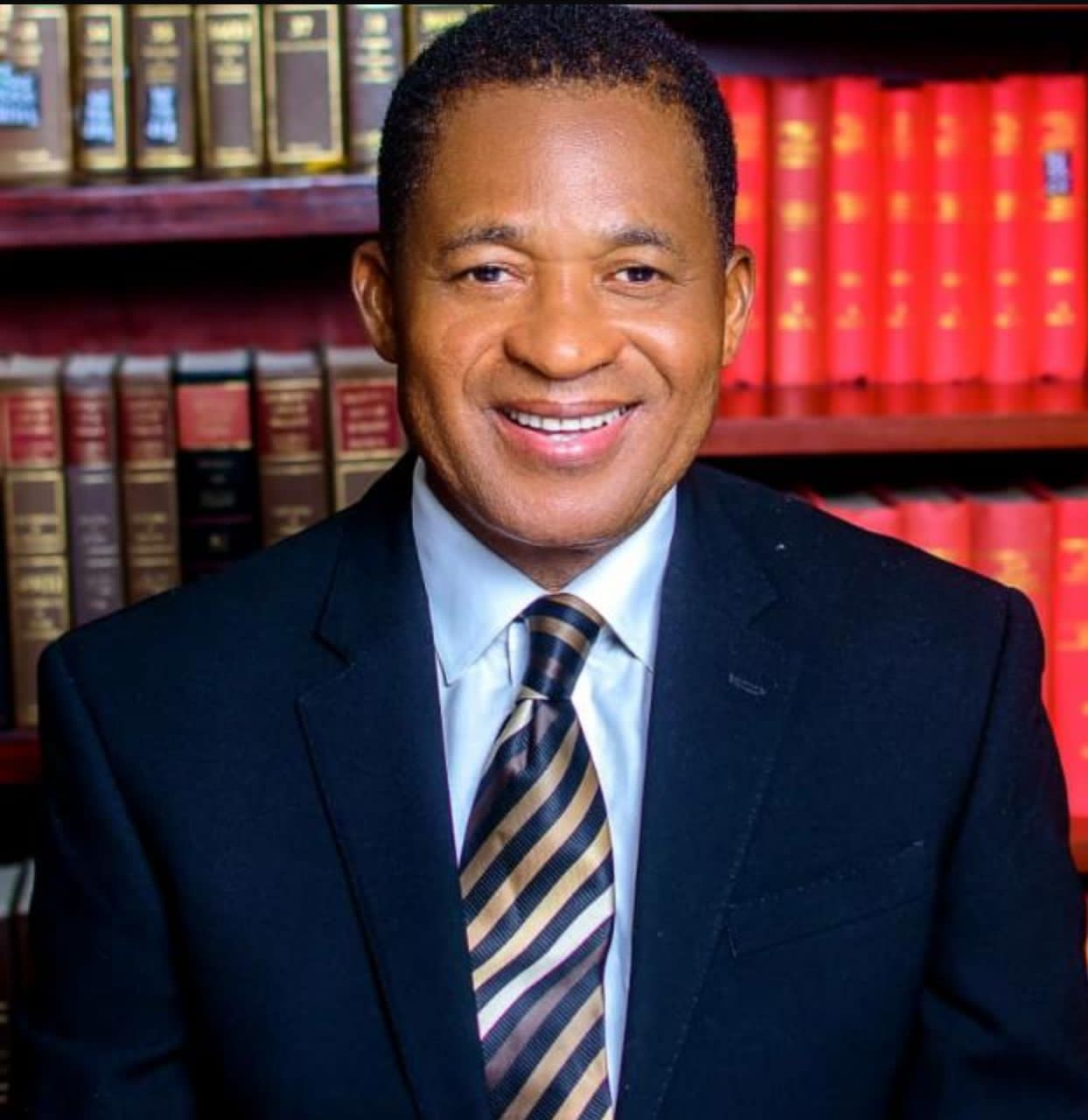
In a powerful Keynote Address delivered at the Nigerian Bar Association (NBA) Benin Branch Law Week on July 14, 2025, Chief Emeka Ozoani, SAN, issued a clarion call to confront the deepening crisis of public trust in Nigeria’s judiciary.
Speaking at the Ceremonial Hall of the High Court Complex on Sapele Road, Ozoani described the erosion of confidence in the judiciary as a “national emergency” that threatens the legitimacy of the justice system and the foundation of democracy itself.
“We gather today not merely to fulfill a calendar obligation, but to confront a crisis,” Ozoani declared, highlighting the growing public disillusionment fueled by conflicting court orders, delays, and perceptions of corruption. Quoting Lord Atkin, he emphasized, “Justice is not a cloistered virtue. She must be allowed to suffer the scrutiny of ordinary men.”
Yet, he noted, ordinary Nigerians increasingly view justice as “too slow, too expensive, too uncertain,” with some seeing it as a privilege reserved for the wealthy and powerful.
Ozoani pointed to stark symptoms of this crisis, including limited access to justice, systemic inefficiencies, and ethical lapses within both the Bench and the Bar. Citing Afrobarometer data showing over 60% of Nigerians have little to no trust in the judiciary, he warned, “We face not just public dissatisfaction but a profound crisis of legitimacy.”
Access to Justice: A Right Turned Privilege
A central theme of Ozoani’s address was the inaccessibility of justice, which he described as a constitutional right under Section 36(1) of the 1999 Constitution that remains “more theoretical than real” for many Nigerians. “Justice has become less a right and more a privilege, expensive, distant, and often inaccessible,” he said, noting that high court fees and geographic barriers exclude the most vulnerable.
For instance, he highlighted how a petty trader seeking to recover ₦150,000 might face ₦40,000 in filing costs, while rural litigants endure long journeys only to face sudden adjournments.
Ozoani referenced the late Justice Kayode Eso, stating, “A system that fails to deliver justice in good time, to the right people, in the right way, is a system in need of radical soul-searching.” He called for reimagining access to justice as a policy priority, urging increased funding for the Legal Aid Council and expansion of courts to underserved areas to bridge the gap between the privileged and the marginalized.
Corruption and Inefficiency: A Systemic Rot
The senior advocate did not shy away from addressing judicial corruption, which he described as having evolved from isolated incidents to a “systemic and institutional problem.” Quoting Justice Chukwudifu Oputa’s 1976 warning that “Justice…should never again become a marketable commodity,” Ozoani lamented that public discourse now includes claims that “courts are bought” or “judges are on payrolls.”
He pointed to election tribunals as particular flashpoints, where conflicting rulings and allegations of external interference have deepened public skepticism.
To combat this, Ozoani proposed a zero-tolerance policy for corruption, merit-based judicial appointments, routine lifestyle audits, and transparent court data. “Real reform requires a shift from episodic punishment to systemic overhaul,” he asserted, urging the National Judicial Council (NJC) to adopt proactive measures to restore integrity.
The Bar’s Role in the Crisis
Ozoani also turned the spotlight on the legal profession, arguing that a compromised Bench cannot thrive without an enabling Bar.
Quoting Justice Adamu Jauro, he noted, “The Bar contributes to the corruption of the judiciary by acting as a conduit between the litigant and the judicial officer.” He cited cases of lawyers engaging in forum shopping, failing to remit client funds, or making false claims against judges, which erode public trust. “The courtroom cannot command trust when lawyers weaponize the law to frustrate due process,” he said, calling for a proactive disciplinary process and ethical rigor within the Bar.
Delays and Public Perception
Chronic delays in justice delivery were another critical issue raised. Ozoani echoed Professor Akin Oyebode’s description of the judicial process as “notoriously sluggish,” noting that prolonged cases, from commercial disputes to criminal trials, render justice hollow. “The common phrase ‘the matter is still in court’ now reflects frustration and hopelessness,” he said, advocating for digital systems, judicial timetabling, and enforceable timelines to ensure timely justice.
A Roadmap for Reform
Ozoani outlined a comprehensive reform agenda to restore judicial credibility, emphasizing transparent judicial appointments, continuous judicial education, and full digitization of court processes. “The adoption of technology in Nigeria’s judiciary is no longer optional; it is an urgent necessity,” he stated, proposing e-filing, real-time judicial dashboards, and public court calendars to enhance transparency and efficiency.
He also called for strengthening the NJC’s oversight, suggesting quarterly ethical audits, independent ethics panels, and a whistleblower system to ensure accountability. “The NJC must evolve into a proactive, transparent, and data-driven institution,” he urged, emphasizing collaboration with the NBA and civil society to democratize oversight.
A Call to Action
In his conclusion, Ozoani reminded the audience that the Bar and Bench are “the living face of justice itself.” He stressed that restoring public trust requires a cultural and ethical renewal, not just procedural fixes. “Until justice is credible to the average Nigerian, whether in the courtroom, in the marketplace, or on the street, our work remains unfinished,” he said, quoting Justice Kayode Eso: “The judiciary must not only be above board; it must be seen to be above board.”
As Nigeria grapples with a judiciary under scrutiny, Ozoani’s address serves as both a sobering diagnosis and a hopeful roadmap. His call for integrity, transparency, and accessibility challenges the legal profession to act with urgency to rebuild a justice system that is not feared but respected, not avoided but trusted, and not broken but reborn.
 A story of courage, wonder, and the transformative power of self-belief; perfect for readers aged 10+ who love adventure. To place order: +234 806 130 3237 | +234 803 582 0870 OR Tap the link to grab a copy:https://www.zeekapublish.com/product/the-magical-life-of-anna